Porridge, candels, & carols at New York's Finnish church

By Laura Palotie

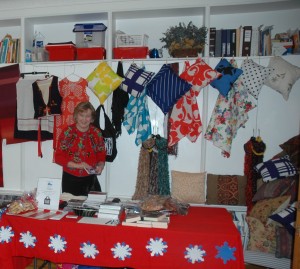
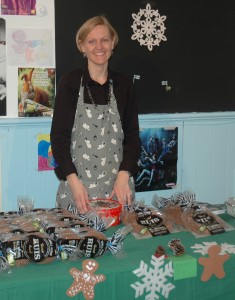
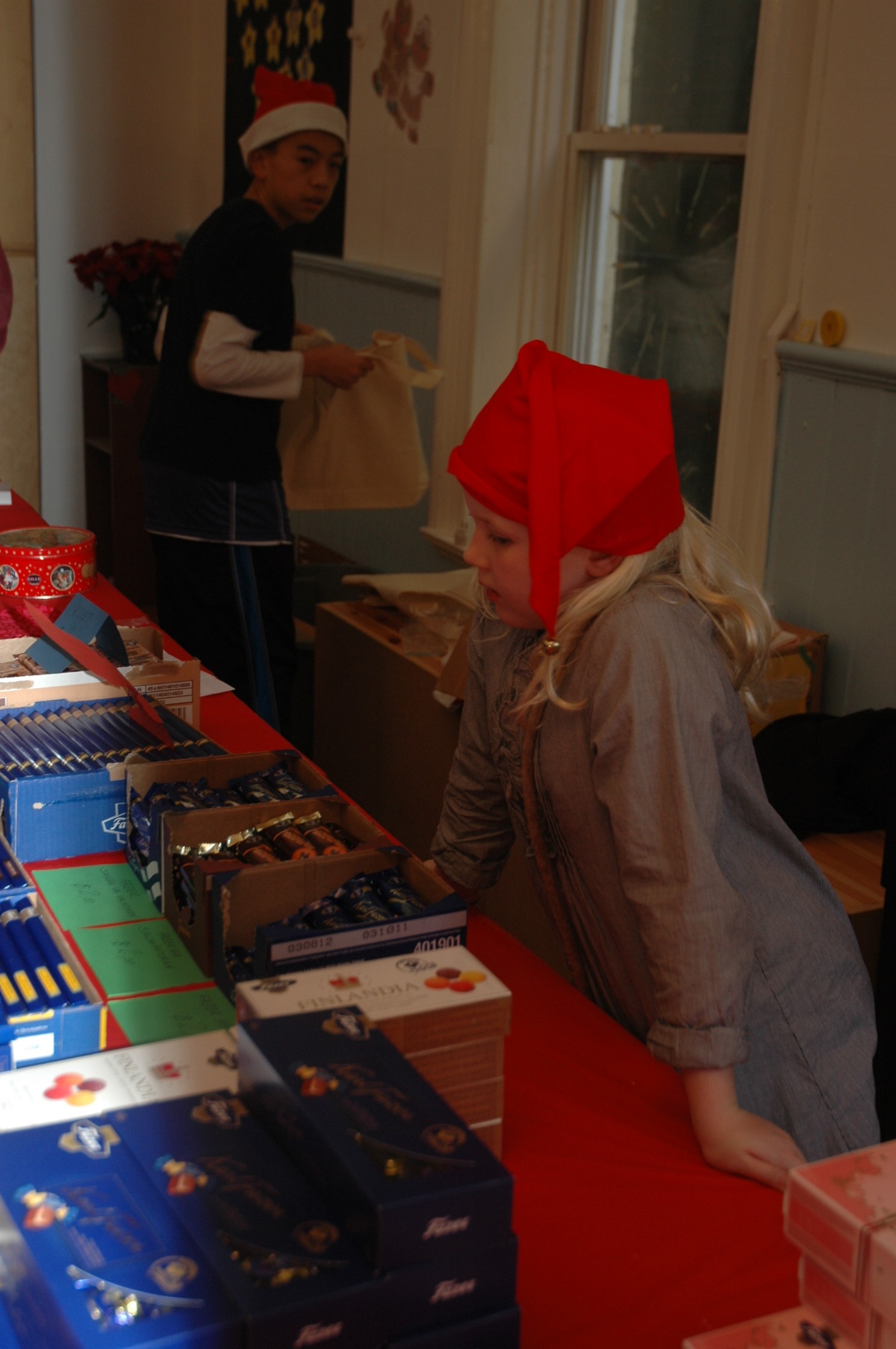
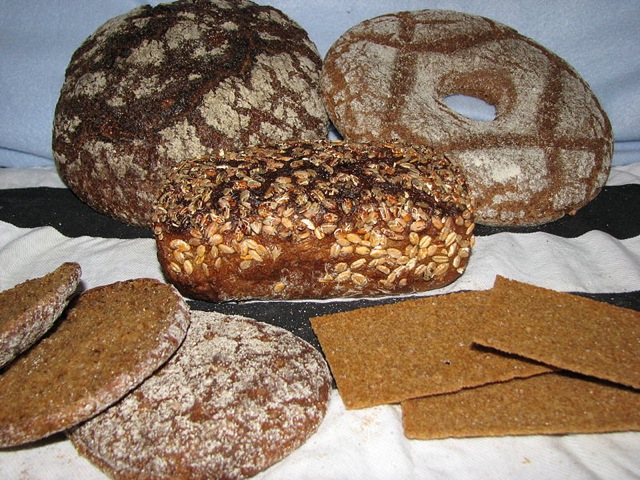
Today the Finnish community of New York will once again flock to Greenwich Village, where the city’s Finnish church and school join forces for their annual holiday bazaar and traditional Christmas carol sing-along. Most of the city’s expat Finns have become a seamless part of the city’s hurried habits, but for one day each year several generations are brought together by the scent of traditional rice porridge and songs reminding them of Christmases past. In addition, the traditional Lucia procession is a cherished tradition for many parents and children.

About forty volunteers work on the event, whose planning begins in early October, says Ilona Lähde, co-coordinator of this year’s event. Lähde has lived in New York for two years, and two of her three children have been students at the Finnish School of New York. She adds that in addition to the sing-along, the Lucia procession and the traditional porridge, Finnish candies and baked goods such as Karelian pastries are popular draws at the bazaar. Many also stop by to browse handmade Christmas decorations, wool socks and holiday cards.

Image credit: FreeDigitalPhotos.net

Image credit: FreeDigitalPhotos.net

“There’s something homey and familiar about the event, and gives people the opportunity to meet other Finns in addition to enjoying treats and hearing songs that are dear to them,” she says. Lähde adds that her family particularly looks forward to the Saint Lucia procession, which honors the patron saint of light and follows a tradition celebrated in Scandinavia on December 13. One lucky child gets to don a crown of lights, while others follow her down the aisle of the church with candles in hand. Lucia Day is most notably celebrated in Sweden, and is thus an important holiday among Swedish-speaking Finns. “Our children attended Swedish-speaking schools in Finland, and it was nice that we didn’t have to forego the Lucia tradition after moving to New York,” Lähde says.

The popularity of the event, which frequently fills up the church, reflects the importance of Christmas in Finnish culture. During the darkest time of the year, a holiday devoted to family, food and light is approached with gratitude and reflection; this attitude is visible, for example, in the markedly spiritual holiday songs. “Finns quiet down for several days to celebrate the holiday,” Lähde says. “Christmas is certainly one of the biggest holidays in New York as well, but [Americans celebrate it] with more flash and color.”

A visitor to New York's Russian baths

By Laura Niemi

A few weeks ago I received a tempting invite on Facebook. Finland Center Foundation asked me to join a women’s sauna gathering at Wall Street Bath in Manhattan. As both a sauna blogger and a Finn who misses sauna terribly, I was immediately excited. I had heard many stories about the legendary Russian saunas in New York, so I simply had to visit this one.

Showing characteristically Finnish punctuality, I arrived in the lobby at 7:00 p.m. on the dot. I expected to see a group of women gathered together, but couldn’t see a single person. I started to feel nervous. Had I come on the wrong date? Would I dare to go inside alone? While waiting, I had time to think. If I, as an experienced saunagoer, felt insecure in front of a Russian sauna, how unsure must our foreign friends have felt when we took them to the Finnish sauna for the first time?

We Finns don’t have any specific sauna rules; we simply advise our sauna guests to listen to their bodies and trust their senses. I wondered if this piece of advice would also work in a Russian sauna, or there was something else essential that I should know. I knew that German people had a strict sauna code, but what about the Russians?

Luckily I didn’t have to test my courage. After a while I saw Jaana Rehnström, President of Finland Center come inside with another lady. Adventurously we went in and had a fun time. The Wall Street Bath had different kinds of saunas, from steam to red-hot wood-heated saunas. The place was a little bit worn out, and most of the customers seemed to be Russian men. It seemed to offer a homey meeting place for immigrants far away from their home country.

Wishing you wonderful moments in the steam!

Laura, who moved to the U.S. a couple of years ago, is one of the founders and editors of a new wellness blog called Saunaflow.com. To Laura, a sauna is not just a place but a state of mind, and she is always looking to hear new sauna-related ideas and experiences. Join the sauna discussion at  www.saunaflow.com. Check out, for example, her list of sauna etiquette rules at www.saunaflow.com/page/4/.

24 tuntia New Yorkissa

Finland Center Foundation's  president, Jaana Rehnström, has written a post about her day of meandering around New York, meeting old friends and exploring Finnish cultural offerings. It’s in Finnish, so those of you who aren’t fluent speakers yet can use it as an opportunity to practice the language!

Näkymä New Jerseystä Manhattanin High Line-puistosta. Kuva: Saga Blane

Näkymä New Jerseystä Manhattanin High Line-puistosta. Kuva: Saga Blane

Vihdoinkin vapaa! Aikuinen tytär on Suomessa, teini-ikäisen pojan kesäloma on alkanut ja hän on lentänyt Suomeen, josta molemmat jatkavat tänään Italiaan interrailaamaan yhdessä. Ilahduttaa, että he molemmat haluavat tämän seikkailun. Mies lensi kotikaupunkiinsa tapaamaan veljeään, joka ei ole hyvässä kunnossa. Joten olen siis vaihteeksi kesäleski, sinkku, ha-haa. Tosin talo on täynnä vieraita, kuten yleensä, mutta mieluisia: ystäväni, kirjailija Leena Lehtolainen serkkunsa Lauran kanssa ovat vierailulla.

Huomenna Leena on luvannut vierailla Finland Centerin kirjakerhossa, jonka jäsenet ovat lukeneet hänen dekkariaan Väärän jäljillä ja haluavat keskustella siitä suomeksi. Ehkä Leenan läsänolo inspiroi minua kirjoittamaan, kertomaan mitä kaikkea voi 24 tunnin aikana tapahtua New Yorkissa – sellaisia pieniä asioita, joiden vuoksi on helppo hurahtaa tähän kaupunkiin. Kuten tulette huomaamaan, loppujen lopuksi tämä on kuin pieni kylä.

Eilen, pidettyäni maratonikokouksen kotonani Finland Centerin johtokunnan kanssa ja toivotettuani Leenan ja Lauran tervetulleiksi, ehdin vielä illalla nauttimaan harvinaisesta ylellisyydestä eli elokuvasta. Tosin, koska minun Finland Centerin johtokunnan puheenjohtajan asemassa kuuluu tietää jotain suomalaisesta kulttuurista, valitsin Docpoint- suomalaisen dokumentaarielokuvan festivaalin esityksen 92St Y-Tribecassa esitettävän, Arto Halosen ohjaaman ja tuottaman filmin Pyhän kirjan varjo.

Menimme ensin Leenan ja Lauran kanssa Greenwich Villagessa sijaisevaan Moustache-ravintolaan, jossa on ystävällinen palvelu, halvat hinnat ja hyvä ruoka! Sitten hyppäsin metroon ja menin leffaan. Hämmästysekseni meitä oli yleisössä vain kaksi. Näköjään PR ei taaskaan toiminut – suomalaisille se on tosi vaikea juttu oppia tässä kaupungissa, ja koskee myös osittain omaa järjestöäni. Arto Halonen tuli itse esittelemään elokuvan, joka oli mielestäni taidokkaasti tehty, muistutti vähän Michael Mooren tyyliä... ja valaisi erittäin hyvin Turmenistanin tilannetta, josta häpeän tunnustaa etten tiennyt yhtään mitään, vaikka olenkin elinikäinen ihmisoikeusaktivisti.

Elokuva teki minuun suuren vaikutuksen. Arton ja amerikkalaisen juristin Kevin Frazierin järjestelmällinen ote, sinnikkyys ja kekseliäisyys tulivat hyvin esille. Kansainvälisten yritysten julistukset eettisistä periaatteista osoittautuivat tekopyhiksi, kun todellisuudessa he suostuivat kääntämään ihmisoikeuksia polkevan diktaattorin kirjan eri kielille päästäkseen osallisiksi maan öljy- ja kaasurikkauksista. Loppujen lopuksi ainoastaan suomalainen yritysjohtaja (Timo Miettinen, Ensto) selitti kameran edessä, miten he tajusivat tehneensä virheen suostuttuaan aluksi kääntämään naurettavan, mutta vaarallisen teoksen suomen kielelle. He päättivät kuitenkin olla julkaisematta sitä, koska yrityksen eettisten periaatteiden kunnioittaminen oli tärkeämpää kuin kyseisen liikesopimuksen saaminen. Olin todella ylpeä hänestä!

Kävelin tihkusateessa takaisin kotiin pitkin melko autoita katuja, mutta en tuntenut oloani mitenkään uhatuksi. New Yorkilla oli pitkään maine vaarallisena kaupunkina, kun se ei ole ollut lähelläkään tilastojen kärkipäätä vuosikausiin.

Olen gynekologi ammatiltani, ja aamulla sain puhelinsoiton potilaalta, jolla oli paha kuukautisten aikainen migreeni. Soitin hänelle lääkkeet apteekkiin. Tänään olin päättänyt jatkaa suomalaisen dokumentaarifilmien katsomista, joten suuntasin klo 13 Scandinavia Houseen. Siellä nautin Peter von Baghin Helsinki, ikuisesti -teoksesta. Yleisö oli hiukan runsaampaa kuin edellisenä iltana, joukossa useita tuttuja New Yorkin suomalaisia. Kerroin parille heistä surullisen uutisen, newyorkilaisessa sairaalassa eilen kuolleesta vanhasta suomalaisesta sotaveteraanista, ja juttelimme tulevasta muistotilaisuudesta. Kävin vielä katsastamassa talon tämänhetkisen pohjoismaalaisen taidenäyttelyn, kauhistelin kaupan hintoja (75 USD norjalaisesta kudotusta myssystä?! Pitää todella rakastaa Norjaa ostaakseen sellaisen...) , ja päätin sen sijaan nauttia talon ravintoloitsijan, Smörgås Chefin, hyvästä kahvista ja maukkaasta mantelikakusta.

Koska ilma oli hyvä, kävelin koko matkan kotiini Greenwich Villagessa. Sunnuntai-iltapäivä oli miellyttävä ja ihmisiä kuhisi kaduilla. Mietin, pitäisiko poiketa Finland Centerin toimistossa Salmagundi Clubilla katsomassa postit, mutta päätin jättää huomiseen – varsinkin kun uuttera harjoittelijamme Suomesta oli ne eilen tarkastanut. Kävelin Washington Squaren läpi, jonka itäosa on juuri avattu pitkän puistoremontin jälkeen (ainoastaan yksi osa on enää työn alla). Puisto oli täynnä kaikenikäisiä ihmisiä, kitaran- ja jopa pianonsoittajia ja koiranulkoiluttajia.

Kuten tavallista, kuulin Greenwich Villagen kaduilla taas useita eurooppalaisia kieliä ja mietin, miten suomalaiset ja muut eurooppalaiset tuntuvat viihtyvän tässä kaupunginosassa. Koska olimme jutelleet Finland Centerin jäsenetujen lisäämisestä saadaksemme lisää maksavia jäseniä kustantamaan kulttuuritoimintaamme, päätin poiketa italialaisessa ravintolassa, jossa perheemme usein käy syömässä, Trattoria Toscana. Omistaja ei ollut paikalla, mutta sain hänen puhelinnumeronsa, ja kotiin tultuani soitin hänelle. Hän lupasi muitta mutkitta Finland Centerin jäsenille 10 % alennuksen. Se taas pisti miettimään, ketä muita voisi kysyä, joten tässä taas seuraavalle viikolle tehtävä… tämä ei ikinä lopu, aina sitä keksii jotain tekemistä!

Illalla tekstailin lasten kanssa, onnellisesti Italiassa, ja soitin miehelle Kentuckyyn. Sen jälkeen päätin sitten vielä tehdä toisen kultuuriteon, nimittäin mennä Janitan esitykseen Bowery Electric -nimiseen klubiin East Villagessa, jossa tämän illan esityksen tuotot menivät Japanin maanjäristyksen ja tsunamin uhreille. Kun saavuin paikalle, sain elämäni yllätyksen, kun portsari pyysi nähdä henkkarini! Olen todellakin useita vuosikymmeniä vaadittua 21 vuotta vanhempi. Sanoin hänelle olevani imarreltu, mutta ehkä hänellä on näössä jotain vikaa eikä hänellä tietenkään ole sairasvakuutusta, jotta voisi mennä silmälääkäriin…

Janitaa edeltänyt bandi oli myöhässä ja jouduin odottelemaan drinkkini kanssa. Lopulta Janita tuli lavalle, hiukan flunssaisena ilmeisesti, mutta ääni kantoi hyvin. Lähtiessäni törmäsin nuoreen naiseen, jonka tunnistin potilaakseni. Nuori nainen tuijotti minua ja kysyi, mistä hän tunsi minut, vaikka olen nähnyt hänet varmaan 20 kertaa ja muistin heti hänen nimensä. Pari korttelia myöhemmin kotimatkalla törmäsin toiseen tuttuun, tyttäreni yläasteen aikaiseen koulutoverin isään. Hän tervehti lämpimästi ja kyseli, miten tyttäreni voi – kerroin viimeiset kuulumiset, ja hän vuorostaan kertoi, että poika on Citibankissa töissä…

Koska en ollut ehtinyt syödä illallista, pysähdyin pieneen Dojo-ravintolaan, jonka omistaa japanilainen ystäväni ja joka on läheisen NYU:n opiskelijoiden suosiossa. Puolalainen baarimikko toimitti kanankoivet ja valkoviinilasillisen. Sanoin dziękuję, ostin läheisestä pikkuliikkeestä Bleecker Streetillä New York Timesin sunnuntainumeron (jotta minulla olisi huomennakin tekemistä) ja menin kotiin nukkumaan.

Just another day in New York.

A salute to the White & Blue

img_3498-682x1024.jpg

By Laura Palotie

In the U.S., Independence Day is celebrated with streamers and fanfare; in Finland, it’s with the quiet glow of torches amidst the falling snow. The 93-year-old nation’s Christmas traditions distinguish themselves with their preference for quiet reflection – our holiday songs are notably melancholy and each December 24th, an official Christmas Peace is declared. December 6th, the day marking our independence from Russia, fits right into the season. The streets quiet down, the windows become dotted with white-and blue candles, and most families opt to celebrate at home. The day’s flashiest celebration, the president’s Independence Day reception, is greeted each year by a group of loud protesters who view the event (modest and toned-down by most head-of-state standards) as an elitist occasion for the rich and privileged.

Yesterday, my second Independence Day in Finland after 11 spent in the U.S., I braved the blizzard and headed to central Helsinki to observe what my friend coined “the most patriotic tradition a Finn can partake in": a torchlight procession made up of students at the University of Helsinki. Wearing their white graduation caps, the students make their way through the epicenter of the city and congregate on Senate Square where the all-male Helsinki University Chorus sings Sibelius’s Finlandia.

img_3510-300x200.jpg

Their singing is a textbook example of the unabashed power of dynamics and intonation, and listening to Veikko Antero Koskenniemi’s lyrics of a small country retaining its footing through years of oppression is the perfect cure for the ignorance that frequently stems from privilege. The sea of torches, made up of individual students who, simply enough, want to be part of it all, is the sincerest way of expressing that our generation hasn’t yet taken independence for granted. No gunshots or fireworks needed.

Arctic Jungle Fashion Gala: Partying for a good cause

annabella-200x300.jpg

A few weeks ago Finland Center Foundation helped to put fun back into fundraising. Some 150 party people gathered at La Pomme club for the The Arctic Jungle Fashion Gala, socializing and dancing the night away. The event, where designer dresses were sold at a live action, was organized to raise funds for the Congolese Panzi Hospital.

TV-presenter Annabella Åsvik served as the master of ceremonies and welcomed everyone to the event around 6.30 p.m. Dressed in a shiny dark brown Stella McCartney dress, Åsvik told the audience the fashion fundraiser was meant to show that “we can be beautiful from both inside and out.” Though the evening had a Finnish and African theme, the atmosphere at La Pomme was undeniably New York chic. Little black designer dresses, sequence bits, beautiful models and a free-flowing open bar all created a true New York club feel.

Before the party kicked off, former UN Undersecretary for Humanitarian Affairs, Jan Egeland, brought the audience greetings from the Democratic Republic of the Congo. He has visited Panzi hospital and its founder Denis Mukwege on several occasions, and has witnessed the battered women’s suffering firsthand. Egeland thanked Finland Center for its efforts “to help Mukwege and the world community to change one of the biggest injustices of our time.”

alex2.jpg

Afterwards singers Dorothy Bishop and Alexandra Alexis brought the party spirit back to La Pomme. While the audience seemingly enjoyed hearing Alexandra Alexis’s new song, it was Bishop’s disco beats that made the crowd go wild and momentarily turned the event into a big dance party. “Crazy!” exclaimed Bishop in her shiny silver dress.

“The event was fabulous. The audience was really fun!” said Bishop afterward. She said she especially enjoyed performing to Europeans, as she was able to sing a song from the Eurovision Song Content. Bishop was happy to be able to lend a helping hand to the women of Africa, having visited the continent herself. “I feel privileged to be able to help through music,” she said.

db2.jpg

The evening’s highlight for most people was the glamorous fashion show, led by Finnish supermodel Angelika Kallio, and the live auction that followed. Designers such as Nicole Miller, Anna Sui and IVANAhelsinki had donated clothing for the show.

Professional auctioneer Amanda Ladd got audience members to compete hard for the best dresses. The winners scored such deals as a Nicole Miller wedding gown for $300, her black cocktail dress for $200 and IVANAhelsinki’s summer dress for $275.

Mr. Ljungqvist of Sweden was one of the lucky ones, as he managed to win the bets on quite a few dresses. “I don’t know how many I bought. I’ll give them to my girlfriends,” he said, though quickly ensuring that “I only have three girlfriends!”

The fashion show included professional models like Kallio and Rosa Korhonen, as well as newbies, such as Mia Dallorso. The Finn, who has lived in the US for two decades, said she was initially nervous about modeling in the show. “Everyone had worked so hard for this event,” said Dallorso, who donned a blue Nicole Miller scarf dress, among many others. “But I think it was super!” “The event went incredibly well, the gala was beautiful,” rejoiced Åsvik, too.

But as much fun as New Yorkers had at the event, the biggest joy will undoubtedly be experienced by the Congolese women who will receive the auction’s proceeds in the coming months. Click here to see a collage of the photos from the evening by Stewart of NY. See a video of the event below:

U.S. Immigration at a Glance

american-flag-300x214.jpg

By Ceridwen Koski, Associate Attorney, Tooma & Ozisik LLP

In late July, a group of Finland Center members gathered to discuss a wide variety of immigration issues in the parlor of the Salmagundi Club. Amanda Goodman and I talked about visa possibilities in many different contexts but only covered a tiny fraction of the important stuff. Here are some must-knows to consider.

  • One rule of thumb is that your status is usually dependent on a sponsor until you obtain a Green Card or are simply traveling to the U.S. for a short time to visit.

  • Those visiting for 90 days or less may register for permission to visit the U.S. through the visa waiver program (if your country is listed) or apply for a B visa. But remember, if you enter with the visa waiver program, you cannot change or extend your status. With the B visa, you may do both of those things.

  • Think of the following as sponsors: school, work, and family.

  • Some employers host training and exchange programs applicable to numerous professions and skill sets, from medical training programs to summer camp. If you find a program, you may qualify for a J visa. The sponsor needs to be pre-approved and there are many organizations that facilitate the sponsorship. J-1 visas sometimes have two-year return residency requirements to the home country – so be aware of this when planning. Some will qualify for a waiver to allow change of visa status without returning home.

  • If you are thinking about studying in the U.S, identify a specific school or program and contact that institution’s international student department regarding the F-1 visa. The school will provide the I-20 form and SEVIS registration, which are needed to apply for the visa. If you wish to work while studying, you must have the I-20 specifically endorsed for work. Similarly, after you complete the program, you may benefit from “optional practical training” – a year’s worth of work authorization. If your degree is in Science, Technology, Engineering or Mathematics, the work authorization may last up to 29 months based on your study program!

  • Things to know about working in the U.S: there are numerous visas specifically for employment – all require planning and consideration of timelines. You need to have a job offer and an employer who will sponsor you. A bachelor’s degree or the equivalent is required for the H-1B visa. If you plan to work for the same employer in the U.S. that you have already worked for at home for over one year, you may qualify for an L-1 visa. If your employer in the U.S. has same nationality as you, may qualify for an E-1/E-2. If you are renowned in your field, look into the O-1 visa. If you are a performer and have a tour planned, you might use the P visa.

  • Working temporarily in the U.S. can result in an opportunity to apply for a Green Card. Talk to your employer about Green Card sponsorship as soon as possible to set expectations and learn about timelines. There are significant waits associated with some work-based Green Cards depending on the category under which you apply. If you do not qualify under EB-1, you may have to wait between three and eight years to apply for your Green Card after the employer’s petition is approved. Some common pathways to work-based green cards include H-1B to EB-3OR EB-2, E to EB-1 or EB-2, L-1 to EB-1 or O-1 to EB-1.

  • If you are an H-1B holder, the process of obtaining a Green Card often involves a labor certification, which is the employer’s labor market test through the Department of Labor. Labor Certification is required for all EB-3 categories and some EB-2 categories. As long as the labor certification is filed by your 5th year in H-1B status, you can stay in the U.S. until you obtain the green card. EB-1 (and some EB-2) allows you to skip the labor certification all together. Plan ahead and make sure that both you and your employer understand the minimum requirements for the position as they determine the work-based category. People who are leaders in their fields or published researchers may qualify under the EB-1 category with very short wait times.

  • Are you married to a U.S. Citizen? Then you qualify as an immediate relative! Your spouse may sponsor you by filing an I-130 petition with the USCIS or directly at a consulate abroad. Filing the petition, your spouse needs to show that he/she has the finances to support you (alternatively, a co-sponsor may file the petition by submitting three years of tax returns). You should have a Green Card in six months to a year. If processing times increase, you should apply for a K visa to enter the U.S. until the Green Card is approved.

  • Other forms of family sponsorship fall into five categories, with various wait times. During this process, a family member has to file the I-130 petition. You should apply for a Green Card when the priority date is current: otherwise you might lose your chance.

Generally, work-based visas depend on your credentials and your employer. Whenever you change sponsors, you will need to file more paperwork.

Some useful websites include www.uscis.gov (U.S. Citizenship and Immigration Services), www.usembassy.gov (U.S. embassies and consulates abroad), www.cbp.gov (immigration inspection at airports and U.S borders) and http://www.immigrationdirect.com/ (e.g. U.S. immigration news, informative blog).

Feel free to contact me at ckoski@tolawllp.com if you have questions.

Q&A with Olavi Hirvonen

Finland Center president Jaana Rehnström recently sat down with Olavi Hirvonen, former Olympic skier and founder of vacation center Lapland Lake in Upstate New York. The two chatted about the Winter Olympics, his connection to Finland and his future plans for Lapland Lake.

Olavi with his wife, Ann.

Olavi with his wife, Ann.

Olavi, you must have been watching the Olympics; what comments do you have on the games, your sport, and the Finnish skiers today? 

Oh, compared with my time, it’s like night and day! Everything is different; the trail grooming, the advances in the equipment, the new suits – our clothes used to be so uncomfortable! And of course the skiers are really professional, also in the sense that once they’re on the team, they get paid. They do year-round training, which means they might travel to ski in New Zealand during the summer here. And freestyle didn’t exist until the 1970s. 

I find that the Finnish skiers have less sisu than they used to in the past. Perhaps the whole doping scandal a few years back lowered the morale for everyone afterwards, or perhaps they just don’t train as much. 

Do you go back to Finland nowadays? Has it changed a lot?

Yes, we have gone back from time to time, particularly to the Finnish Lapland to ski after we close here for the season. The last time I was in Finland was six years ago. Lately we have preferred to travel to a warmer climate – the Bahamas – in the spring. Finland has changed a lot, particularly Helsinki, which has become such an international city. Even the language has changed; there are so many English words inserted into speech now. 

You are almost 80 years old – what are your plans for the future of Lapland Lake?

I continue to work here every day, and it seems like people expect me to go on forever…sometimes I’m reminded of the joke that President Urho Kekkonen supposedly made in his will “IF I die…” We have been trying to sell the property for several years now. But we want it to continue more or less as it is today, and have turned away some offers we felt didn’t respect that vision. I’m still looking for the right buyer.

Olavi Hirvonen: an Unofficial Ambassador for Finland

By Jaana Rehnström

On a recent winter weekend, I drove with my family from up New York to Lapland Lake, a Nordic Ski Center in Upstate New York that former Olympic skier Olavi Hirvonen has been running since 1978.  A Finn immediately feels at home here: the whole character of the place reminds me of my youth in what was then a less prosperous, but in some ways more wholesome Finland. 

Lapland Lake’s eclectic row of flags reflects the international mindset of its founder, Olavi Hirvonen.

Lapland Lake’s eclectic row of flags reflects the international mindset of its founder, Olavi Hirvonen.

The little rental cottages (tupa in Finnish) are simultaneously unpretentious, clean and comfortable, and they all have Finnish names like Pulkka and Poro. The ski trails, groomed each morning by Olavi himself, are called Vasa, Sisu, Eräpolku, etc. They run from one’s cottage door through the beautiful and peaceful scenery of the woods and offer different levels of difficulty for different skill levels. There’s a real Finnish wood-burning sauna, and the restaurant offers, among other things, lohilaatikko (salmon casserole) and cabbage rolls.

Olavi Hirvonen moved to the United States in 1949, at the age of 18. He was actually born in Montreal, Canada, but it was the Depression, and his parents separated; his mother, unable to care for her child by herself, sent him home to Finland to live with his grandmother when Olavi was only eight months old. His grandmother, apparently a resourceful woman, took him under her wing despite having several of her own children still living at home. This home was located in Koivisto, an island about 50 km east of Vyborg in Karelia. 

In 1937, Olavi’s mother came back to pick him up and take him to America, but soon afterward, the war intervened. At eight years of age, Olavi had to be evacuated along with the rest of his family, and still carries sad memories of the family dog they had to leave behind. Later, when Finns gained back this area of land, the family moved back and rebuilt, only to be evacuated quickly for the second time. 

At 17, Hirvonen completed a six-month military service and became a Finnish citizen. Soon afterward, however, he followed his mother to the United States and got drafted for the Korean war. Having learned to ski in Finland, he was recruited into the Army Arctic Indoctrination School, where he learned and taught arctic survival skills. As a result, he became a U.S. citizen.

img_1599.jpg

This past weekend, Hirvonen celebrated the 50th anniversary of his participation in the U.S. Olympic ski team. In 1960, when the Olympics were held in Squaw Valley, Utah, he was working seven days a week at a ski lodge in Vermont, sneaking in some practice time in the evenings. He was invited to take part in the tryouts for the U.S. Olympic team, and ended up being picked for the 15 km and 50 km races. In the latter, Kalevi Hämäläinen of Finland won the gold, while Veikko Hakulinen, also a Finn, came in second. The U.S. team didn’t win any medals, perhaps in part because Hirvonen accidentally snapped his ski early in the 50 km race and lost valuable time as he searched for a replacement ski.

In 1977, Hirvonen’s son Esa, who was a promising skier, died in a tragic accident. Needing a positive change in his life, Hirvonen decided  to do what he had been dreaming of doing for a long time: open up his own ski center. In 1978, he purchased the area he now calls Lapland Lake. He now runs it with his wife Ann and a staff of 30.

In addition to the flags of Finland, Sweden, and Norway that hang outside, signs of Olavi’s Finnish heritage are visible everywhere in a natural, unforced manner: the little signs that advise visitors to do this or that end with 'Kiitos!'; the shop sells Fazer’s famous “blue” chocolate and Panda liquorice;  kids are invited to interact with pet reindeer. In the past, Finlandia Foundation organized group trips here, but nowadays it’s hard to visit the place in large groups, as it’s become very popular with both locals and tourists. The rental cottages get booked up early, particularly on weekends.

An(other) Old-Fashioned Christmas Story

By Juha Himanen

Working as a research scientist at a big cancer hospital in Manhattan is mostly a dream come true, but every so often it brings about frustration, if not pure despair. Some time ago I started printing out clever quotes I came across and pinning them on the office wall to bring some consolation for the occasional moments of desperation. When a grant application comes back, unfunded, with comments like ‘the plan doesn’t show enough preliminary results from the research group,’ I glance at a statement from the stand-up comedian and an actor, George Carlin, who once said: “I have as much authority as the Pope. I just don’t have as many people who believe it.” When I’m preparing a manuscript and keep exceeding the allotted word count, I go for Albert Einstein who stated: “It’s important to make everything as simple as possible – but not any simpler.” And when I’m trying to engage my colleagues in the holiday spirit, often in vain, I point to the classic introduction by Frank Sinatra before singing the Arlen-Mercer song ‘One for My Baby (And One More For The Road)’. This is what Frankie Boy wanted to tell us: “I feel sorry for people who don’t drink. When they wake up in the morning, that is as good as they’re going to feel all day.” And, similarly, I feel sorry for people who don’t celebrate the holiday season. 

Yes, the holidays, the spirit of Christmas. Some say it’s too much hassle but I say it’s all very magical. And I’m not talking only about drinks at the office, shopping on Madison Avenue, or the Rockefeller Center Christmas tree. I’m talking about the real spirit that you can experience with a little bit of holiday sentiment in your soul. I’m of course a hopeless romantic and still feel like crying when I watch Jim Stewart’s monologue towards the end of ‘It’s a Wonderful Life’, but the story I heard last year makes me promote holiday spirit even more enthusiastically. 

This is a story that happened to my son who studies at Cooper Union, on Astor Place. He was busy preparing for finals last December when he and his friends from school decided to have a quick lunch somewhere around the well-decorated streets of East Village. While walking back to the school after finishing a ‘Christmas sandwich’ at a local Deli, they were approached by a man who claimed that they had just bumped into him and that he had dropped and broken his diabetes medication. The man became aggressive and demanded money to compensate for the loss. My son and his friends were frightened and gave the man all the cash they had, about 20 dollars. When they made it back to campus, they hey felt ashamed and stupid. 

The next day, again busy trying to finish a project in time, my son got a phone call from a friend who was out having lunch. He asked for advice because he had been approached by a stranger who claimed that the student was responsible for a broken medicine bottle. My son immediately asked his friend to prolong the conversation for as long as it would take him to arrive on the scene and recognize the con artist – and perhaps get some kind of restitution. Once my son approached, the con artist realized the danger and started running away. My son and his friend followed him through the Christmas trees, through the holiday decorations and gift shops, and finally caught the stranger. Indeed, he was taking advantage of young people who hadn’t yet experienced the darker side of human nature. They were confronting the man and wanted to get back those 20 dollars. But when they took a closer look at the poor man dressed in rags, with sad eyes and shaky hands, they felt so sorry for him that they suddenly changed their minds. Although their student budget was about five dollars a day, the man, living on the streets, still needed the 20 dollars much more than they did. So they let him go, wished him happy holidays, and headed back to Cooper Union. 

One block before reaching the school, they suddenly saw a dark object on the hood of a luxury vehicle. They came closer and realized it was somebody’s wallet. They opened it to find a telephone number, called it, and got the owner back to his car in five minutes. As one might expect, the wallet contained the owner’s whole life: cash, credit cards, driver license, social security number, everything. The owner considered the incident the best Christmas present of his life. He offered a hefty ‘finder’s fee’ for the boys but they only asked for 20 dollars, “to conclude this Christmas story,” as they put it. After hugs and holiday wishes, everyone involved had felt a little bit of that old-fashioned Christmas magic. 

And after hearing the story, so did I. Believe in magic: it’s closer than you realize! 

Happy Holidays!

Q&A with Janita

janita14-200x300.jpg

The star of Finland Center’s upcoming fundraiser is singer Janita, whose chart-topping hits many Finns remember from the early 1990s. The now 30-year-old singer will be performing her new music, which she has dubbed “alternative soul,” for the benefit of the abused women of the Democratic Republic of the Congo this Wednesday. We sat down with Janita to find out what kind of a show we are in for, and to hear her thoughts on the music business and her own future.

Had you heard much about the situation in the DRC prior to agreeing to perform in The Panzi Hospital fundraiser?

“No, I hadn’t. I just finished reading a book called Poisonwood Bible that deals with the history of the country, but I wasn’t very aware of the current situation. Based on what I know now, this is a cause I am happy to support. There is a lot abuse of women in Africa, on many levels. This is clearly something we can have an impact in, so I’ll gladly do what I can to help. I’d love to be more involved in doing charity work. One of the most positive experiences of my early career was when a girl who was dying of cancer got in touch with me. I went to visit her in the hospital and we developed a type of a friendship. This affected me deeply. I’m glad if I can help people who I don’t even know. There are so many wrongdoings in the world, so I feel it’s our responsibility to help.”

What are your expectations for Wednesday’s event and why should people come hear you sing?

“First and foremost, I hope we’ll get many people to come to the event and can raise as much money as possible. And of course I want everyone to have a great time, so that they’ll support Finland Center in the future, too. I want to do my best when performing. I sing from my heart and I will work hard to touch people from deep within. Musically, this will be interesting for me, since I normally perform with just a guitar, base and drums. But I noticed that there’s a grand piano at the club, so we thought we’d take advantage of it. I think it’ll be an easier set of songs because of the fancy surroundings. It won’t be a rock concert. What I’m striving for is to give people something genuine. It’ll be a bit more rough and gentle, and the whole spectrum. We’re all packages made of layers and on Wednesday we’ll go through the different layers within me. I’ve termed my music “alternative soul.”

Many people remember your pop songs from the 1990s. Nowadays your music is very different. How did that transformation come about?

”I was really young back then. A person that age can’t really decide what she wants to do, but that music felt like the right match. There was nothing fake about it. Even though I’ve changed my style radically, I can see that my whole career has had a common thread going through it. It’s the natural growth of an artist and I have always had my own thing as a foundation. During the time in between my early years and now, I did a bit of jazzy music, which did well in the US and Japan. I have been releasing records in Japan since I was 17. I also have a lot of listeners in Seattle and Atlanta, but the US is such a big country that to be widely recognized requires a lot of work. Over the last few years I’ve moved onto music that has alternative shades of tones. I have been listening to different types of music than I ever did before, mixing it up. I have a lot of influences.”

How does it feel to be a little fish in a big pond in New York, when in Finland you were a big fish in a little pond?

“New York is a very difficult place to build a career. It can be very frustrating, because it seems there’s no progress at all. The only way to be successful in New York is if you become a widely known big artist. I haven’t managed to do it yet and it’s not even a priority for me, but of course it would be nice. I have performed in front of 5,000 people in a festival elsewhere in the US, but it doesn’t count for much here in New York. It’s a different world. The smartest thing would probably be to go to a place where you can be a big fish in a small pond. But I live here because the city inspires me. I have friends here and a foundation to build upon. New York kind of sucks in that it is so addictive. I’m addicted to the energy that I simultaneously hate. If I was only thinking of success, it would make more sense for me to move to Seattle and go from there.”

What’s new with you and your music?

“I’m going through a transitional phase right now, as there have been many changes in my personal life. I seem to find out more about myself everyday. New York is a hectic place: You are always on the go and you don’t have much time for self-exploration. I just finished recording my new album, Haunted. It has been released in Finland, and I’m working on the US release. I put a lot of my heart and soul to it.”

janita3.jpg

You sing in English and you’ve lived in the U.S. for nearly 14 years. How is your Finnish nowadays? 

“Today I couldn’t think of such a simple word in Finnish as “intelligence.” It’s important to notice this happening. As a kid, I remember meeting someone who couldn’t speak good Finnish anymore, and I realized that this is not what I want for myself. I have a friend who has an awesome book collection of Finnish classics, so I borrow books from her. I go through a lot of trouble to maintain my vocabulary, in case I ever have to write anything in Finnish again. So I haven’t become another Andy McCoy. In the last few years I’ve started valuing my Finnish roots more, and all that is related to being Finnish, more so than when I left the country as a 17-year-old kid, thinking that “America is the best.” My views have changed somehow. I love thinking I’m a citizen of two countries and it’s important for me to understand both of the cultures that made me who I am today. In some ways I feel half American, but at the same time I think there are so many good things about being Finnish and European: The depth of our thinking, our cultural values, and how well we’ve been educated.”

Do you ever think about moving back to Finland or are you a New Yorker for life?

“Yes, the thought of moving crosses my mind every now and then and I want to keep my options open. But I just decided today that I’ll spend the next three years here. I got my green card a few years ago, and I don’t want to risk losing it. It was like a rock fell from my heart, especially because I like New York so much. In some ways commitment is a peaceful thing. When you commit to something, it takes the anxiety away. It has a soothing effect, whether it’s in a relationship or in deciding where to live. But you can’t just be in New York and push forward, you have to get out of the city sometimes. Yet there’s something in this energy that’s addictive. Something is always happening. But also, there’s so much happening that you don’t even remember what happened last night. That’s the good and bad side of New York at the same time. Though I’ll never leave for good, I also don’t want to spend the rest of my life in New York. I see Europe in my future, but I don’t know what part yet.”

Any final words on why people should come to The Panzi Hospital fundraiser on December 16th?

“I think this time of the year is great for events like this. We are living in abundance and Christmas is an important time to think about these things. Another responsibility we have in life is to make it as good as possible for ourselves. So any opportunity we have to celebrate and do something good, it’s extremely important to take advantage of it. I also know this event will be very cool. Salmagundi has a good atmosphere to start with, and when you add music to that and pool, which is one of my favorite hobbies, and an informative documentary film and all the good company, why would you not go?”

Q&A with Ambassador Jarmo Viinanen

viinanen31.jpg

Finland’s Permanent Mission to the UN is one of the two gold sponsors of Finland Center’s December 16th fundraiser supporting the work of the Panzi Hospital in the Democratic Republic of the Congo. We spoke with Ambassador Jarmo Viinanen about the situation in the DRC, violence against women and about gender equality issues in Finland.

What motivated the Finnish mission to the UN to become a gold sponsor for the Panzi Hospital fundraiser?

“Two reasons. The first is the seriousness of the situation in the DRC, and the fact that violence against women is something that happens all too often worldwide. In the DRC, violence against women is now used as a war weapon, as a means of terrorism. When women are raped, they are stigmatized and isolated from the society. The Panzi Hospital offers both physical and mental support for these women who are victims of rape and other types of violence. So it’s an easy cause to support. We also want to support Finland Center Foundation’s valuable work. It’s not easy to raise money for such a sensitive cause. It takes a lot of effort. So from that perspective, it’s nice to be able to support Finland Center in this. This event combines a lot of good things.”

For those people who haven’t followed the situation closely, what exactly is happening in the Democratic Republic of the Congo?

“The situation in a nutshell is that after the genocide in Rwanda, many Hutus escaped to Eastern Congo to get away from Rwandan officials and the Tutsis. They’ve been there for about 15 years now. While the Hutus occasionally strike into Rwanda, above all the problem is that they are making the situation very volatile in the DRC, a country the size of Western Europe. So this is a huge country with several tribes and groups, and not much law and order. Internal conflicts and violence between the different groups are problems that are present more or less all the time. Amidst all of this it is the women who have become the victims of attacks.”

Why are women  targeted? 

“Partly it might be a systematic thing: these people want to break down the whole society by targeting women. Violence against women causes tremendous physical and mental damage as it harms the whole society and its ability to survive. Another reason might be that people’s perceptions of right and wrong get weakened in war situations. People become more corrupt, and are willing to do things that would be unheard of in an organized society. They become lone soldiers who will do whatever it takes to survive and to claim their place in society. Peoples’ moral codes are clearly weakened during long periods of violence.”

When the scale of the problem is as big as it is in the DRC, how much can we really help with small fundraising events such as the one at the Salmagundi Club on Dec. 16?

“Everything helps, even smaller-scale events. The benefits of fundraisers like this one are two-fold: one is that we’ll directly support an institution that helps women who have become victims of violence. The second is that we’ll increase awareness of this issue. What we are talking about here is violence that is hard to describe, where the women are not only raped: their genitals are slashed and mutilated, their uteruses are ripped out, their rectums are slashed. This all causes such complications that they can never live normal lives again. That’s why The Panzi Hospital’s work is very important. These women need extensive surgeries to be able to lead any kinds of lives. Talking about issues like this is very difficult. Our own code of morals tells us that this is something that is clearly wrong, and we find it hard to even discuss these terrible things. It’s much easier to just be quiet. So increasing awareness, whether it’s in the US or in Finland, is important. People need to know that this is going on and that we need to do something about it. By organizing fundraisers like this we’ll hopefully be able to mobilize people and to get violence against women to decrease.”

Has the United Nations done anything to combat the situation in the DRC?

“Yes it has, several things. There is a big peacekeeping operation in the DCR, with 20,000 peacekeepers altogether. The mission of this operation is specifically to protect the civilians. But this hasn’t worked out that well because it’s a huge country with millions of people and the troop size is still relatively small considering that. In addition, the Congolese troops and, to some extent, even the peacekeepers have ended up contributing to the violence either directly by raping women or indirectly by buying prostitutes’ services. Apparently even some UN peacekeepers have been guilty of this. It’s a very complicated thing.”

But if the peacekeepers know that they were sent the DRC to protect the civilians, how is it that they then start raping the women and making the problem worse?

“I know that this seems inconceivable, and definitely hurts the credibility of the UN.  This is a really serious matter. Unfortunately, as we have learned from thousands of years of history, whenever there’s a situation of war and there are a lot of soldiers, who are usually male, violence against women becomes a problem. So while it’s hard to understand that some peacekeepers would do this, one just needs to look at history. It’s hard to say whether the situation is worse now than before, but at least there’s more awareness now of what’s happening and that we need to stop it.“

How big of a problem is violence against women in Finland?

“Nearly 20 women die each year in Finland as a result of domestic violence. That’s a major number in our statistics. According to studies, domestic violence is more common in Finland than in many other European countries. So that goes to show that Finland, too, has a culture of violence, even though there isn’t a particular reason for it. Again, if we look at historical facts, the prevalence of violence of all types peaked in the country during the 10-15 years that followed war. For a long time the violence in the society reflected the fact that people had lived through war and violence themselves.”

Finland is often considered a model country of gender equality. Does it deserve that reputation?

”When it comes to gender equality, Finland is doing really well in principle. And of course if we compare the country internationally, we can call the it the model country for equality. In terms of law, men and women are equal in Finland. We have a female president, and more female than male ministers in the government. The percentage of women in the work force is very large and that is possible because of our good daycare system. It’s clear that when women are earning money, it makes them more equal in relation to their husbands. But this doesn’t mean that we wouldn’t have any issues to deal with, though not so much in terms of law but in putting it to practice. Many of these issues are deep-rooted in the society and don’t have clear reasons, like domestic violence. And while we have more female politicians these days,, in the business world there are very few women on the top. This has to do with traditions and educational backgrounds of people. Business leaders have traditionally been engineers in Finland, and the bulk of engineering students are naturally male. And when you are choosing who to hire, you’re more likely to hire people you know, maybe people you studied with. So that’s one explanation.“

What could we do to improve gender equality worldwide?

“The one thing to do would be to guarantee education possibilities for girls. This is one of the biggest equality problems worldwide. In situations where there’s no public school system and you have to pay for school, the families are almost guaranteed to educate the boy child. That’s the universal rule. When girls are given an equal opportunity to get educated, from elementary school to the university level, this promotes gender equality more than anything. Finland’s experiences in this are clear. We’ve had gender equality in education for a very long time, and access to education hasn’t been determined by your gender. Nowadays we have more women in universities than men. Countries like Finland can promote gender equality worldwide by designating funding for the education sectors of developing countries. That way we can train more teachers, so that we can educate more children. This is the way to do it.”

How much have you worked with gender equality issues in your career?

“Previously in my career it wasn’t a very central focus, but it has been more so since I got appointed as the UN ambassador of Finland. If there’s one thing that defines Finland’s role in the UN, it is our focus on promoting gender equality. This is very important for us. For example, Finland has paid money into a UNDP fund that covers the cost of a female representative from a developing country to travel to an environmental summit. If a delegation already has two men traveling to a conference, and they choose to bring an additional member and it’s a woman, we will pay for her trip. We think it’s important that women’s voices are heard in climate change discussions, because they are the first ones experiencing its effects. In many countries it is the women who take care of the families’ everyday lives, and if it becomes harder to fetch water due to drought, for example, women will notice it first. That’s why we want to hear women’s perspectives in all international summits, including the climate change conferences. Also, the more women there are involved in peace processes and negotiations as peacemakers, the more their points of view come up: what peace means to them and what kinds of things we need to pay attention to. If it’s men waging wars and using guns, and then the same men do peace negotiations, we all understand it’s not a good system. But if women are included in peace negotiations, I think that this would help take into consideration the matters that really affect people’s lives.”

Finally, why should people come to The Panzi Hospital fundraiser on December 16th?

“It’s worth coming to the event because this is a way to help the women and girls who have been victims of unfathomable violence. This is a way to do something good, offer concrete help, and be involved in aid work. Also, I expect it to be a fun night and that we’ll have a great time!”

Q&A with Alexandra Alexis

By Laura Palotie

New York is a city of actors and musicians, and it comes as no surprise that its population of Finnish artists is as diverse as the city’s creative scene as a whole. This Friday, members and friends of Finland Center will have the opportunity to cheer on the budding career of pop singer Alexandra Alexis who, over the past two years, has embarked on the city’s music scene with joy, confidence and tenacity. This past summer, I sat down with Ms. Alexis to learn about her background, her upcoming album, and her busy day-to day routines as she promotes her work and builds her personal brand. Believe it or not, making it in New York seems to be a less complicated process than doing the same in Finland.

alexandra-alexis1.jpg

One of your big breaks was performing in the Helsinki cast of the musical Hairspray. But looking further back, how did you first get into performing?

“I’ve dug music and performing ever since I was little, but it may have been during my high school years in Finland that I really started getting into music seriously. I was in the special music track in high school, and once during choir rehearsal my teacher suggested I take on a couple of solos. So from there, it just took off for me; every time I got to perform in front of an audience, I realized that I really enjoyed it and could do it well.”

So how did your solo career begin?

“When I was part of Hairspray, I used to also perform gigs around Helsinki. I went and promoted my music around town whenever I had time. Maybe it was just the drive to build a larger career. I got into this pattern where after the curtain call I washed off my stage makeup, put on new makeup and rushed to a club to perform there. Then the next morning I had to get up for rehearsal and was totally wiped. I flew to Asia for a few weekends too; after I was finished at the theater, I’d hop on a plane around midnight, fly to Bangkok for a day, perform a gig and fly back. It was crazy but it was fun.”

Even though you went to high school and got your career started in Finland, you spent most of your childhood here in New York. When did you decide to move back to the city, and why?

“My mother is Finnish and my father is of French descent. They met in New York City in the 1980s, so I was born and raised here. This time around I’ve been here for about a year and a half. After being in Finland for a few years, I started really missing New York; I started yearning for a challenge and feeling like I had seen everything there was to see in Finland. At the end of the day it’s a small place, and after you perform the local club circuit a few times, there aren’t a lot of other places you can go; you just wait for your next album to finish so you can go perform again. The circles in New York are so much bigger; there are more places to throw gigs and promote your music, so it felt like the right place for me. I moved back here in 2007.”

Have you run into any surprises, now that you’re living in the city as an artist?

“It’s interesting; just last week I did an interview with a reporter for a Finnish newspaper, and was asked the same question I always get from Finns: “Why are you choosing to come here to make a career happen? Isn’t it a lot more difficult?” they ask. The truth is, I think it’s a lot easier. In Finland, there’s almost a pervasive attitude of “everything is hard” if one wants to do something artistic. In Finland I heard “no” a lot more, and it was a lot harder to promote my music and book gigs there. Here, everyone just says “oh that’s great, that’s fabulous” and are so excited about everything. If you have a strong single in hand, are talented and have assembled a good team behind you, it’s really easy to start doing things.”

Do you write your own music?

“I write a lot, and have several books full of material, but when I get beats from producers, I like to figure out melodies that go with those beats. The first single on my upcoming album was finished in just a few hours. I heard it and thought it was awesome. I got all kinds of ideas right away, sang melodies on top of the beats, and before we knew it, the song was finished.”

Your new album is coming out later this fall. What can you tell us about it?

“I’m working with a couple of producers: Nicholas Wright, who has worked with Beyonce and Jordin Sparks and is doing Shakira’s new album. I met him at a nightclub called ‘The Box.’ His beats are very Lady GaGa, Kylie Minogue-esque, club-type of beats, a lot of fun. I’ve done some R&B type material in the past, but this time it’s all pop and dance.”

How did you come up with the album’s name, ‘May Cause Shortness of Breath?’

“We went over ideas for names with my publicist, and I said how lame it is when people put their own names in their album titles. Then we thought, what if we approached dance music as a kind of medicine you had to take? And what would this medicine bottle say? “May cause shortness of breath” is like the side effect of my music.”

You currently work with publicist Martha Banks. How much promotion do you do yourself?

“Quite a few people suggested Martha to me because she likes to work with new artists. So we met for lunch and she said “let’s try this for two weeks.” Two days later, when I called her and said I got a sponsorship with Kimora Lee Simmons—I just approached her myself, backstage at a concert—Martha was impressed. I’m not the type of artist you have to babysit; I do so much on my own that it’s easy to work with me. She noticed it early on. Many artists work day jobs, but I do this full-time, which makes it so that we can work with a very small team (myself, Martha and her assistant).”

For those of us who aren’t familiar with the way sponsorships work, can you explain how you’ve landed sponsorships so far? Is it different here than in Finland?

“After I met Kimora Lee Simmons, I had a meeting with her representatives and played them my songs, and they thought I was the kind of artist who fit their brand, so our collaboration started from there. What’s important is meeting people and telling them what you do, and at some point if you’ll get in front of the right person. When I first started promoting myself as an artist in New York, I called different people, said I was a manager or publicist of myself and got myself into events. And then I’d just find a backstage pass somewhere. You can’t wait for someone to knock on your door. In Finland I tried to get sponsors for a long time and explain that it would help firms get visibility, but mostly they just said “no, we don’t do stuff like that.” Here, companies understand the business side of things—that it’s only positive for them. It’s saved me a lot of energy and money to be able to borrow clothes. I don’t even like shopping anymore!”

So who else is sponsoring you right now?

“I’m working with Erin Featherston, who lends me gorgeous dresses for shows—I just visited her showroom and she said things like “Oh, we just got this back from Beyonce so you can probably wear it next week” (laughs). I also wear things by Jordi Scott, Andrew Marc, Kalvin Clein, K-Swiss and Girlprops.”

It seems that moving forward in your career has been easier for you here than in Finland. If you could send a message to the Finnish music industry, what would it be?

“Just having a positive outlook on life is important. What’s not understood in Finland is that promotion and marketing are really important things. When I was there, self-promotion was seen, by some, as “pushing yourself.” If you’re an artist with an album coming out, of course you want to promote it and do gigs and interviews. It’s a totally normal thing. People should collaborate and build their brands—often musicians think that when an album comes out they’ll throw a round of gigs, do a round of interviews and then it’s over. Musicians often don’t have a lot to do. The local industry should create a lot more opportunities for artists.”

What advice would you give to other aspiring artists?

“I tell everyone this: Don’t go to auditions. Auditions and workshops are good if you want to learn a new singing technique, etc. but you don’t need them if you already have your own thing going. A lot of artists throw their money into workshops and spend time standing in line at auditions, when the easiest thing to do is go out and meet people; it’s always who you know, not what you know. With ‘Hairspray,’ I new someone involved in the project who said I’d be perfect for the role, and before I knew it, I had it. And it’s amazing to think how many girls dream about being in a musical. Auditions are stupid: You stand in line with a million girls who look like you, wait all day to maybe be seen for that one role. You can easily meet casting directors at parties. People think it’s so hard and it’s really not.”

So what would you say is your biggest challenge right now?

“There isn’t enough time in a day. Right now I’m totally exhausted, but it comes with the territory. I’ve been told that people who aren’t in this field can’t understand how hard it is. You wake up in the morning and have to make yourself look great, and then you run around and meet people all day. You meet so many people that just remembering everyone’s name is a challenge. I have to take constant notes. You have to give your all to your career. I have no other life. It would be nice to spend more time with friends but it’s really hard.”

What about future plans? What would you like to see happen next, and what do you envision in the long term?

“It’s so hard to say. Oprah once said that if you had asked her what she’d be doing at this point, she wouldn’t have been able to answer. There was a time when all she wanted was a house and some money. A lot of the things I wanted to accomplish I already have—I wanted to have sponsors and be able to walk the red carpet at events, and when little things like that happen you pause and think “ok, what now?” I have a good album and a lot of exciting gigs coming up. It’s hard to say what I still want because right now everything is going so well and I’m having so much fun with it. Having a headlining world tour would probably be the ultimate thing.”

Hammock on 1st Avenue

hammock-picture.jpg

By Juha Himanen

I got a hammock as a present for Memorial Day. It’s now proudly and attractively hanging on a balcony right on First Avenue. I can hardly believe that I can come home from the office, kick off my shoes, and have a Budweiser on a hammock that faces the Upper East Side of Manhattan. 

When I was a university student in Finland, we had several things listed as symbols of ‘La Dolce Vita,’ life with some extra special pleasures that average man is usually unable to achieve. Lying on a hammock right in your own backyard (or balcony for that matter) was at the top of this list. Other things included skiing in the Rockies with the jet set crowd, driving a convertible along a sandy beach, and relaxing by a pool while sipping a funny drink garnished with an umbrella. During my professional years I’ve found it fairly easy to try out the other items on the list, but adding a hammock into the mix has been a tough one. Now I finally feel as if I’ve reached the top; my own hammock right in the heart of New York.

Since my plan to make a hammock part of my routines turned out so well in the end, I started paying extra attention to a few other Manhattan secrets. When I was at the Hudson this summer, having dinner at the Boat Basin cafeteria, admiring the sunset over the river and listening to a blues band on the lawn of the Riverside Tennis Association, I could hardly believe that I live in one of the biggest urban areas of the world. New Yorkers are masters of taking advantage of their limited living space–and in imaginative ways. Did you know that there’s a place ten minutes from Columbus Circle where you can spot 200 species of birds during the spring, more than almost anywhere else in the Northeast (and more than you can ever spot anywhere near Southern Finland)? It’s called Rumble in Central Park. Forget its somewhat dodgy reputation for a while, and take a minute to listen to the variety of bird songs as you smell the linden. And in ten minutes, if you wish, you can be at the Metropolitan Opera.

Back to the hammock and the ‘Dolce Vita.’ When I was having my initial First Avenue hammock experience over Memorial Day weekend, I realized another great thing about living in the US: while in Finland there’s only one Midsummer Festival (or Juhannus as it’s called over there), here I can have three of them. Memorial Day and The Fourth of July in the US are exactly what Juhannus is in Finland: opportunities to escape the busy city life, eat unhealthily, and get hammered if you so wish. And if you are as lucky as I am, you can actually celebrate them all while ‘hammocked’ in the city, where half the population seems to have escaped to the Hamptons and you have twice as much space to yourself than during a regular weekend.

Finally, a thought hit me while relaxing in the hammock, on my First Avenue balcony, during midday on a Midsummer Saturday: “Don’t listen to your Sunday school teacher!” The sun was really bright that day and I was wearing my sunglasses. Suddenly I noticed that one of the lenses was almost falling off. I had just made myself so comfortable that I had no wish to get up and start finding a small screwdriver–something I probably would’ve never found anyway. So I quickly checked my fingernails. Yes, my fingernails. Those that every grownup throughout my childhood was asking me to keep short. And, indeed, the thumb of my right hand had a nice, almost a quarter-inch long, untouched, pristine nail. I fixed the screw problem in a second with a little help from that very nail – while lying on the hammock on First Avenue, mind you – and had the wisdom of the day ready to go: ‘Never cut your fingernails; you never know when they might come in handy!’

Q&A with Sue Cedercreutz-Suhonen

By Laura Palotie

This weekend, friends and members of Finland Center will have the opportunity to gather over a Sunday brunch while peering into the mind of one of Finland’s most revered painters. Author, art historian and museum guide Sue Cedercreutz- Suhonen will give a free lecture on artist Helene Schjerfbeck’s modernist style and the mysteries behind some of her subjects.

Earlier this week, Cedercreutz-Suhonen was kind enough to answer some of my questions about her fascination with Schjerfbeck, her work as a guide, and her collaboration with actress and playwright Meri Pakarinen.

Sue Cedercreutz speaking about Helene Schjerfbeck in front of her paintings at Villa Gyllenberg art museum.

Sue Cedercreutz speaking about Helene Schjerfbeck in front of her paintings at Villa Gyllenberg art museum.

You’ve worked as Head Guide at Helsinki-based art museum Villa Gyllenberg since 1996. What does your work usually entail? 

“I work part-time at the museum, which means that I’m regularly there on Wednesdays and Sundays when we are open to the public, as well as on days when we open the museum for special groups. I also introduce the art of Villa Gyllenberg by giving lectures and tours at special events organized by the Signe and Ane Gyllenberg Foundation, the owner of the museum. Naturally, I also take care of paperwork regarding the administration of Villa Gyllenberg. It’s my responsibility to supervise that visitors are satisfied with their visit and that they get the information we need. I feel more or less like a hostess to our visitors, and the most rewarding aspect of my job is discussing art with them.”

What initially inspired you to research Helene Schjerfbeck and her work?

“I have loved Helene Schjerfbeck´s works since I was a teenager. Villa Gyllenberg also has the biggest private collection of Schjerfbeck´s paintings.

In 2002 I met Lea Bergström, Curator of the Hyvinkää Art Museum, who had done some research on the people who modeled for Helene Schjerfbeck in Hyvinkää. We became acquainted, and the idea was born that I should try to find the models behind the paintings. We have 31 paintings by Schjerfbeck at Villa Gyllenberg and most of them are “faces.”

Our research “Helene Schjerfbeck – Models” was published as a book in 2003 in Finnish, Swedish and English. We were very happy when it was chosen as the most beautiful book of the year [by The Finnish Book Arts Committee].”

In researching Schjerbeck, what were some of the most surprising discoveries that you made? 

“It was thrilling to work as a kind of detective, to follow the clues Helene Schjerfbeck had left behind. It was thrilling when you could identify one of her models, and in the end find their relatives who could supply photos and information about the model. These people were all very kind and co-operative when we met. Some even became my friends.

For Helene Schjerfbeck, it was important that the model inspired her. The personality of her models was more important than their beauty. In her paintings, an ordinary working girl could become an aristocrat.”

What started your collaboration with Finland Center? In other words, what brings you to New York?

“Originally it was Meri Pakarinen, the actress performing a monologue on Helene Schjerfbeck´s life, who contacted me. She has performed twice at Villa Gyllenberg, and thought that the members of the Finland Center Foundation needed some background information about Helene Schjerfbeck in order to fully understand her play [Pakarinen is scheduled to hold a performance of her one-woman show at Salmagundi later this spring]. It just happened that I had already booked a private trip to New York.”

What are some of the main topics that you plan to address at your lecture? What should attendees look forward to?

“I hope that the attendees get a clear picture of Helene Schjerfbeck´s life and art. She began her career as a realist, but over the years she developed and simplified her art and fine-tuned her colors, becoming the first Finnish modernist.”

What about Schjerfbeck might be relatable to American audiences? What aspects of her life and work are universal, in your opinion?

“Did you know that Helene Schjerfbeck was influenced by the American painter James Whistler, and his painting entitled “My Mother?” Schjerfbeck studied abroad for almost ten years, which above all meant Paris, Brittany and St. Ives. Her art is not particularly Finnish, but European. She learnt a lot from the Old Masters, and in creating her own style she was influenced by painters such as Paul Gauguin, Paul Cezanne and Henri Matisse.

Helene Schjerfbeck isn’t completely unknown to Americans. Her paintings were featured in 1992 at the Phillips Collection in Washington D.C., and at the National Academy of Design in New York. Reviews were very positive. After her paintings were shown in 2007 and 2008 in Hamburg, The Hague and Paris, she is now becoming better and better known outside of Finland. Today she ranks as the most expensive Finnish painter of all time.”

What’s next for you? Any new projects you can share with us?

“I’m currently working on a project with our neighboring museum, Didrichsen Museum of Art and Cultur. Together we will showcase around 50 paintings by – guess who? I never get tired of her!”

Jazz veteran Heikki Sarmanto plays at Finland Center

Laura Palotie & Heikki Sarmanto. All photos are courtesy of Jaana Rehnstrom.

Laura Palotie & Heikki Sarmanto. All photos are courtesy of Jaana Rehnstrom.

By Laura Palotie 

Valentine’s Day (known as ‘Friendship Day’ in Finland) will get off to an early start this evening at 7 p.m., when one of the most influential figures in Finnish jazz gives a celebratory concert at the Salmagundi Club. A pianist and composer whose career spans to the early 1960s, Heikki Sarmanto got his training at the Sibelius Academy and the Berklee College of Music, and over the past four decades has premiered his works at venues like Carnegie Hall and the Finnish National Opera.

Earlier this week, I had the opportunity to chat with Sarmanto about his career, his recent projects, and his insights into the state of jazz music today.

You studied at Boston-based Berklee College of Music in the '60s. What were some of your first impressions of the U.S., and how did your time at Berklee shape the direction of your career?

It was a fantastic experience, and influenced my music, my way of thinking, and my worldview in remarkable ways. In terms of its musical offerings, Boston is an incredibly international place. The local universities attract students from around the world, and there are artists from different fields, not just from music. I had a band during my time in Boston, and some of those recordings have just made their way to the U.S. One, entitled ‘Boston Date’ recently got a good review on All About Jazz. Imagine it, 40 years later. So like I said, my time in Boston was very important to me as a musician, it allowed me to form fantastic relationships with other artists—musical contacts that remain to this day. And it wasn’t just with fellow Berklee students; I studied piano privately with Margareth Chaloff, a legendary teacher.

How would you describe the '60s jazz world, as opposed to the scene today?

Art in the '60s and ’70s was very progressive, forward-thinking and liberal. These days we are living in relatively conservative times in terms of jazz. The “mass production”-side of jazz music has progressed in a significant way. There are numerous institutions that produce skilled musicians on an assembly line of sorts, but individuality is currently a rare phenomenon.

How do you, as a composer, move against this trend of so-called “mass production”?

I don’t know if I have to go against it per say, I’m just being myself. I’m a product of a particular time period, and musical trends that happened then are still considered very modern and avant-garde today.

How about the state of Finnish jazz specifically? How would you describe it?

It’s exactly like I said. We train tremendous amounts of skilled individuals. The technical and theoretical skill level among today’s musicians is currently very high, and in general we are living in a very technical age. If you think about it, in all professions we are spending a lot of time staring at computer monitors.

You travel a fair bit between Finland and the U.S., and maintain close collaborative relationships on both continents. What are some of the differences you’ve noticed between European and American jazz traditions?

The U.S. is the country of origin for jazz, which creates huge differences. But jazz also takes its strength from discovering remote locations like Finland. There’s a degree of artistic tension these days between Europe and the U.S., with Europeans saying “we can do the same things here and we can be better.” It can be fun to adapt this attitude, but you can’t take it too seriously. And on the other hand, because jazz has spread like wildfire around the world, there’s also a degree of ‘America-imitation’ in Europe, in which local musicians copy their American role models. In the end, everyone creates the kind of music they want to create, and there’s no use getting competitive about who is better.

Where do you spend most of your time?

Mostly in Finland, but I might find myself spending more time here in the future. I see a lot of American qualities in myself actually, so when I go to Helsinki, I often feel like a visitor. I have a lot of colleagues and collaborators here, for example, and I frequently perform new works by American composers.

What should the audience expect to hear at this Thursday’s concert?

I’ll be playing my own compositions, of course, including a new piece called ‘All About You.’ I’ll also be premiering a series of jazz pieces by an American composer named Laura Clayton, whom I studied with in Boston in the ’60s. She’s a notable composer who, among other things, won the ISCM [International Society for Contemporary Music] award. She was also recently commissioned to write a piece for the American Composers’ Orchestra. You never know, maybe I’ll throw in my own arrangement of a Chopin composition or a Finnish folk song into my repertoire as well.

sarmanto-concert-4.jpg
sarmanto-concert-1.jpg

Holiday Hangover

Editor’s note: The U.S. may sparkle, glitter and sing around Christmas time, but some would argue that it’s the Finns who approach this yearly holiday with a higher degree of emotional devotion. Perhaps due our geographic proximity to Santa Claus, w…

Editor’s note: The U.S. may sparkle, glitter and sing around Christmas time, but some would argue that it’s the Finns who approach this yearly holiday with a higher degree of emotional devotion. Perhaps due our geographic proximity to Santa Claus, we tend to view Christmas with a degree of personal ownership. And when the sleighbells finally quiet down, many of us are hit with a sense of post-celebratory depression. Below, one of our members shares his sentiments.

By Juha Himanen

It’s Inauguration Day, and finally the holiday season is over. And I have a hangover! During a year when Christmas, the New Year, and Hanukkah all fell on weekdays, even a well-trained Finnish party animal had a job to do. I, for one, happened to have the especially daunting task of coping with not only my expat protestant friends, but also with my Jewish colleagues and the Orthodox Russians, both of which I know plenty. So, unlike years past, when I had to get used to the fact that the Holiday Season (I would love to say ‘Christmas’ but that would be way too politically incorrect) starts on Thanksgiving at the latest, this time around I had to accommodate a couple of midweek Hanukkah get-togethers, the new and the old Christmas, and the new and the old New Year. Indeed, it’s not a typo: according to the ‘new’ Russian orthodox tradition (if there can be a ‘new tradition’ to start with), the ‘old New Year’ is being celebrated 21 days after the ‘new Christmas’ but the ‘new New Year’ happens seven days before the ‘old Christmas’. It’s not really important to know the details, but the end result is that if you were hanging around with the abovementioned people this season, you will be looking for medical attention by the inauguration.

holhang1.jpg

It’s not that I’m complaining. Quite the contrary: I had the time of my life. Holidays in New York overplay Christmas in Finland six to love – this season at least. For example, I have previously totally missed the chance to give presents during the days of Hanukkah. I didn’t get any myself this time, but I’m very optimistic that if I do all my deeds for Mayor Bloomberg, by December 2009 my Menorah will be covered with goodies. I also learned that trying to see the Fifth Avenue decorations at 6 pm is only for masochists. Judging from the number of people this year, one could never have guessed that the city was facing the worst recession in a millennium. I guess it’s because earlier I never had time before midnight to take off for a stroll in the midtown. The late days of the Season in New York City offer an additional advantage, namely that stores are open for 24 hours a day. Who wouldn’t appreciate a special 30% off for a jumper at Macy’s at 1 am on Christmas Eve?

I never knew, before now, that it’s possible to get a perfectly salted Christmas ham done in a day. Thanks to my Finnish colleagues, from now on I won’t waste time and money negotiating the price of a brined ham with the Hungarian butchers. In times of recession and innovation, I also learned to make a potato casserole, to salt a salmon, and to buy the ‘recession red’, wine in a box; for three dollars a liter, nothing can go wrong. During the perpetual holiday parties I even found a new talent in myself: dressing up like an elderly Indian drag queen. Yes I Can!

holhang31.jpg

Like sugar on chocolate, I finally saw a White Christmas! Whether it’s because of the global warming as such or because of the gloomy prophecy of Mr. Gore, there never seems to be snow in Finland anymore. But New York had perfect winter weather for most of the holidays. If you don’t believe me, check out the photos I’m attaching here. It was beautiful, it was magical, it was unbelievably mysterious to have the metropolis being covered with this pure, shiny, happy snow!

Let me be a bit protestantically rhetoric, if not pathetic, on this great day of inauguration: ‘Don’t ask what Christmas can do for you, ask what you can do for Christmas’.

Q&A with Seeli Toivio, Olli-Pekka Tuomisalo, and Kalle Toivio

By Laura Palotie

Last Sunday, friends and members of Finland Center were treated to an afternoon of world-class classical and jazz music at the Salmagundi club. As academically trained classical musicians, saxophonist Olli-Pekka Tuomisalo, Cellist Seeli Toivio and her brother Kalle, a pianist and organist, represent one of Finland’s most celebrated and long-standing exports.

While Kalle resides in Brooklyn with his Ukranian-born wife and is completing his studies in classical organ at the famed Manhattan School of Music, Seeli and Olli-Pekka had the opportunity to explore New York from a tourist’s standpoint. Earlier this week I met the trio at a Midtown diner to talk about their experience playing at Salmagundi, their insights on New York, and their lives as professional musicians.

All photos are courtesy of Jaana Rehnstrom.

All photos are courtesy of Jaana Rehnstrom.

What brought you to New York, Seeli and Olli-Pekka?

Seeli: Kalle has lived here for some time - he has studied at the Manhattan School of Music, and recently married an American girl – so right after the wedding in August we decided that we would arrange a visit. And when Kalle told us about this opportunity to give a concert [at Salmagundi], we just grabbed our instruments and hopped on a plane - or well, Olli-Pekka did, I played on a borrowed cello and just brought my own bow.

Have you been to the city before?

Olli-Pekka: I was here a couple of years ago for about a week, just on a short vacation.

Seeli: Aside from Kalle’s wedding this summer, I came here a number of years ago to participate in a cello competition. And now that we have this ongoing opportunity to combine a concert trip with a vacation, we plan to come back more often.
 

Seeli, you said that you played Sunday’s concert on a borrowed cello. What made you decide to not bring your own?

Seeli: I’ve played on borrowed instruments before. There have been times, for example, when I’ve traveled from Finland to elsewhere in Europe and not brought my own instrument. The complicated thing with traveling with a cello is that it needs its own ticket on a plane, and because we had planned to travel here on vacation and had booked our own tickets so far in advance, an extra ticket for my cello would have cost close to 1500 Euros. This worked out fine, though—Jaana got me an instrument from a local music store here. It was a nice cello, worth about $250,000.

What’s the transition like, going from your own instrument to a new one? 

Seeli: Well, it’s kind of like driving a new car. It takes a little while to get used to it. If you borrow someone else’s car, you can drive a short distance, but going on a long road trip is probably not a good idea. Playing on a borrowed cello is similar; you can safely play certain repertoire, like the pieces we picked for this concert.  But if I were playing sonatas or concertos or anything more challenging, I would have had to spend a longer time with this cello. In this case, I only had a couple of hours to get used to it, but it wasn’t a problem.  I’m a professional, after all (laughs).

Olli-Pekka, you’re part of Metallifonia, an ensemble that puts a classical spin on rock-and heavy metal songs. How did this concept come about?

Olli-Pekka: Pianist Risto-Matti Marin and I came up with the idea about three years ago, when we realized that both of us have a past in metal music, both as performers and as patrons. So it felt like a very natural thing, to commission a composer to turn these hits into classical versions. We plan to go on a three-week North American tour this year to promote our album; we’ll be playing in Chicago and some cities in the South. Not all the venues have been confirmed yet, although I don’t think we’ll be making it to New York this time around.

Your selection of music for Sunday afternoon’s concert was notably eclectic, ranging from Sibelius to Duke Ellington. How did you choose your repertoire?

Olli-Pekka: I suggested songs that were a little lighter, pieces with a jazzy flavor, just keeping in mind the fact that this was a Sunday matinee. I didn’t want to choose anything too heavy, not to mention the other kind of ‘heavy’ music that I play. I selected smoother, laid-back songs, but also songs that contrasted one another. You don’t want to have too much of the same thing.

Seeli: I always make audience enjoyment a priority. If I go to a similar matinee event, I want to hear those familiar, beautiful, tried-and-true pieces. This is the kind of basic repertoire that you can polish up relatively quickly and is always appropriate. A 40-minute sonata might fit into another kind of event.

How was the audience response?

Seeli: The space was packed, and a lot of people came up afterwards and said how much they enjoyed hearing those familiar pieces.

Both of you have spent quite a bit of time abroad professionally [Seeli has studied in Budapest and London, for example, and Olli-Pekka’s CV includes performances in numerous countries, spanning from Germany to Russia and China]. In what ways have your international experiences helped define you as a musician?

Seeli: They say that travel broadens your perspective, which is definitely true. I’m from Lahti originally, which is a small town, so if I had spent all my life there and then suddenly left to go abroad, it would probably have been…

Olli-Pekka: …quite a shock. Both ways, I’m sure (laughs).

Seeli: Traveling also brings a degree of confidence and diversity into one’s playing.

Olli-Pekka: And everywhere you go, you encounter flavors of different kinds of performance techniques and musical styles.

Have you gone to see any local concerts during your visit?

Seeli: I don’t go to concerts much during my free time. When I was little, I used to go with my parents to the opera and the ballet and different classical concerts, but now that I make my living playing the cello, it can be a little too much to go listen to more music at the end of the day.

Olli-Pekka: If I go, it’s usually at a jazz club or another kind of venue that plays something entirely different from the musical genres that I focus on.

So what else have you done during the last few days?

Olli-Pekka: We’ve gone to a number of music stores to pick up records and sheet music. Any trip I go on, I always have to find out about local record-and-music shops. In a way it doesn’t make sense, because you can buy all the same stuff online, but there’s a nice feeling in picking them up in person.

Seeli: I ordered a French-to English translation of a Cello manual published in the 1800s from the New York Public Library. They made a copy for me for a little over $100. We are both currently completing our doctoral dissertations [at the Sibelius Academy in Finland], and a lot of these works aren’t available in Finland.

What are your dissertations about?

Olli-Pekka: Mine covers the history of  Finnish saxophone music. I’m doing a written history, as well as a series of five concerts that focus exclusively on Finnish music.

Seeli: Mine covers the history of the left hand cello technique. I’m always scouting for material at libraries and online.

Kalle, you’ve lived in the city since last summer. How do you like New York?

Kalle: I love it. It’s my favorite city. I enjoy a lot of other cities of course, from Helsinki to Paris and Venice, but New York is a place that seems to contain the entire universe within it. It’s so easy to be here, especially as a musician and artist. The city seems to breathe art, no matter what field you’re in.

And you’re the Cantor at the Finnish Church?

Kalle: Yeah, I immediately latched onto the opportunity when I heard that they were looking for someone to fill the position. It’s nice to have a job that corresponds with my own training, and allows me to maintain ties to the local Finnish community. They’ve been so welcoming and open, in many ways they possess all the right aspects of American culture, as well as their Finnish background. It’s also a very active community, and its organizers really get things done.

Any culture shocks?

Kalle: The physical geography of New York took some getting used to—the buildings are enormous and the number of people so vast, but once I got used to it, it hooked me. In the end, you start taking it as a given. Walking around Times Square late at night is safer than walking in the center of Helsinki, because there are so many people around. The atmosphere here is also incredibly open and no-nonsense. Everything is done in a warm, dynamic manner, even though it’s such a large community. It’s a city with a big, beating heart, and something is always happening.

img_0153.jpg
img_0148.jpg

"And bring back as much bread as possible!"

800px-ruisleipa-limppu_reikaleipa_reissumies_hapankorppu-11.jpg

By Thomas Riggs

The above statement is one that is commonplace amongst Finns who are living abroad, especially when they are traveling back home for a visit and are instructed to return with Finnish bread. Finns have a strong fondness for their breads, which are flavorful, healthful and chewy.

Well, I can tell you personally that Finnish bread is something special (at least in my opinion), particularly the dark rye bread – it is addictive. I initially assumed that no Finnish ruisleipä (rye bread) was produced  in the New York area, but was excited when I learned of a Finn, Simo Kuusisto, who was producing Finnish and Scandinavian breads locally. To get a better idea of what he is baking, you should visit his web page www.nordicbreads.com. The pictures alone will make your mouth water. Now I don’t have to dream of somehow getting my hands on Finnish bread through some friend bringing me back some, but am enjoying it almost daily here in the US.

Finnish Christmas in New York

Whether they are celebrating Christmas in Finland or Abroad, most Finns consider December 24th to be the year’s most significant holiday. While the season culminates in Christmas Day in many cultures, Finns place the most emphasis on Christmas Eve. Santa Claus visits children in person instead of sneaking in through the chimney, and many families plan the evening’s dinner menu for weeks in advance.  Below are some reflections on Christmas by Jaana Rehnstrom, Finland Center’s president and a longtime expatriot. You can also find this article in the newest issue of Raivaaja.

By Jaana Rehnstrom

I love Christmas, always have. In my childhood in Finland, we would put the (vinyl) records with Christmas songs on and live with the music creating the mood during the whole of the Advent season. In fact, my three siblings and I used to love the music so much that my parents had to institute a rule that we could not play the records before November 1st. The season culminated in Christmas Eve, when we would drive out to our country place and cut down a Christmas tree, and go home and decorate it; to be followed by a traditional meal and Santa visiting in person. There were presents and we could stay up as late as we wanted that night. 

For my own family here in New York, I have wanted to pass on some of those traditions. Christmas is different in Finland and in New York in a couple of ways: It seems to me that in New York, Christmas is just another one-day holiday – despite the ubiquitous seasonal decorations and marketing here in the US, in Finland we anticipate Christmas more. One example is the many pikkujoulu (pre-Christmas) parties the Finns put up even here away from home. Also, since we are lucky to have a Finnish Lutheran Congregation here, my  family participates in the event that marks the beginning of the Advent season, Kauneimmat Joululaulut (the Christmas carol singalong event). When the children were small, they always got their Advent calendars from Mummu in Finland. As Christmas gets closer, we write our annual Christmas letter to friends and relatives, and debate whether to send it by email or on paper. We receive Christmas cards from friends around the world, including a lot of those plain postcard type Christmas cards from Finland, and hang them up by the fireplace. When my children were small, they loved baking gingerbread cookies and joulutorttuja (prune tarts) with me; nowadays I’m lucky if I can get them to lend a hand. Mind you, they still love eating them!

The Christmas tree gets bought and decorated a few days before Christmas – there is simply too much to do to leave it to the last minute. We also put up decorations in the house – angels and elves made of various materials; some store-bought and some home-made by the kids when they were small. They still get wrapped up and put away and taken out again each year.

On Christmas Eve, we have rice porridge for lunch, with the obligatory almond of course. We usually try to go to our other local (Episcopal) church to take part in at least one service during the season. For a number of years, my children sang in the children’s choir there, so the family schedule was much dictated by theirs. Still, we always managed to have a celebration beginning with late-afternoon glögi while we sing Christmas songs, both in English and in Finnish (that is the only time in the year I get back to the piano to accompany us). This is followed by a reading of the Christmas story at the table, after which everyone digs in:  the first course consists of herring, gravlax, rosolli and boiled potatoes; this is followed by turkey and ham, lanttulaatikko (rutabaga casserole) and carrot casserole, along with some green vegetables.

We open presents in the evening accompanied by coffee and gingerbread plus joulutorttuja and Finnish chocolates which we buy at the Christmas bazaar here. We often have guests – sometimes from abroad, or sometimes expat Finns. When the children were small and still believed in Santa Claus, one of the guests would all of a sudden “have to go check on his car, parked on the street” – missing Santa, who would arrive just at that time, from Lapland of course, with the presents. Since our townhouse has a fire escape outside leading to the third-floor living room, he would ascend the fire escape and climb in the window, with any little ones present hopping and shrieking with joy! We have miles of videotape of Christmas eves to watch, in my retirement I suppose.

Nowadays the evening ends quietly with everyone delving into their new books with Finnish and English Christmas music playing in the background; or we may decide we need fresh air, and take a walk to the late Christmas service at Grace Church. Personally, I prefer that schedule to getting up early on Christmas morning – especially these days with no horses, sleighs or even snow!

My secret life as a Saint

By Diane Saarinen

Some of you might know me as a reporter who writes for Raivaaja and New World Finn but apparently, as this photo shows, I must have some kind of secret life as that Scandinavian light-bringer herself, Santa Lucia.

This all happened innocently enough. I help out with PR for Kris Waldherr Art and Words gallery, and back in November, Kris and I were planning events to hold in the studio during the holiday season. When she mentioned an indoor artisan fair that would take place mid-December, I noted that one of the planned dates would be December 13.

“That’s the day Scandinavians celebrate Santa Lucia!” I told Kris. “Hey, I have one of those crowns. Why don’t I dress up as Lucia and pay a visit to the gallery?”

Editor’s note: In many European nations, December 13th marks the annual Saint Lucia Day, a holiday devoted to Italian Saint Lucy (or Santa Lucia), the bearer of light. Finns commemorate the occasion by electing a local young woman to serve as an ‘of…

Editor’s note: In many European nations, December 13th marks the annual Saint Lucia Day, a holiday devoted to Italian Saint Lucy (or Santa Lucia), the bearer of light. Finns commemorate the occasion by electing a local young woman to serve as an ‘official’ Lucia and lead an annual parade in the Helsinki city center. In the Scandinavian tradition, Lucia wears a white dress, a red sash around her waist and a crown of candles.

We thought this was a great idea – better yet, I thought, since my crown is one of those battery-operated ones and not the kind that holds burning candles. Accidentally setting something on fire would be a hazard of the job I could live without. And never mind I couldn’t sing to save my life – this Lucia would simply pop in a CD and… well what? I hadn’t thought it out that far. Walk around the gallery, I guess!

I did end up finding a copy at home of “40 Rakkainta Joululaulua” [40 Most Beloved Christmas Songs], which included the Lucia song in Finnish, and sung by a children’s choir. Since this was shaping up to be a children’s event, this arrangement would be perfect. As for the white gown, a quick search through the L.L. Bean catalog produced a white nightgown that would do double duty as a saintly shift.

The day of the event, I made glogg (a Scandinavian Christmas drink) for the crowd. Not one to toil, I had found it at IKEA for $2.99 a bottle. My husband, Peter, helped me transport my wardrobe and accessories to the gallery, and referred to himself as Santa Lucia’s roadie.

So how did it go?

Fine! Now I know what it’s like to be a performer at children’s parties! The eager children, ranging in age from about three to five, were waiting for the mysterious lady dressed in white with candles on her head to “bring back the light.” I gave them each a battery-operated candlestick and they followed me around, as they would a Pied Piper, while the Finnish song played. They ate gingersnaps, drank glogg, and overall ended up with quite the sugar rush and ran around as expected. I heard from participating parents that it was a great success. Would I do it again? After seeing pictures of the excited faces of these children, I give a resounding “Yes!”